How to Choose Hot Dip Galvanised Bolts for Your Project?
Selecting the right components is crucial for any construction project. Hot Dip Galvanised Bolts are a popular choice due to their durability. Industry expert Mark Thompson emphasizes, "Quality bolts are the backbone of every strong structure."
Hot Dip Galvanised Bolts provide corrosion resistance. This feature makes them suitable for outdoor projects. However, not all bolts are created equal. Misconceptions can lead to using the wrong type. A closer look often reveals issues many overlook. Some may think cost is the only factor, but reliability is equally important.
While Hot Dip Galvanised Bolts shine in strength, their specifications can be confusing. Many professionals struggle with these details. It's vital to assess the requirements of your project carefully. An informed choice can save time and resources. Avoiding impulsive decisions is key, as the right bolt can make a difference in the long term.
Understanding the Basics of Hot Dip Galvanized Bolts
Hot dip galvanized bolts play a vital role in many construction projects. These bolts are coated with a thick layer of zinc to enhance corrosion resistance. This coating gives them a longer lifespan compared to standard bolts. According to industry reports, hot dip galvanization can increase a bolt's durability by up to 50 years when exposed to harsh environments. This is crucial for structures that are constantly battling weather elements.
When selecting hot dip galvanized bolts, consider the environment. Humidity, saltwater, or acidic soil can affect their performance. Some reports indicate that environment plays a significant role in corrosion rates. For instance, in coastal areas, corrosion can occur much faster, sometimes within a few years. Hence, it’s important to choose bolts that will withstand specific conditions.
Installation practices also matter. Properly tightened bolts can better resist stress and deformation. However, too much torque can damage the coating, reducing its protective features. It's essential to find a balance. Regular inspections can help identify early signs of wear or corrosion. This step is often overlooked but can save costs in the long run. Choosing the right hot dip galvanized bolts requires careful planning and consideration.
Comparison of Hot Dip Galvanized Bolts Properties
This bar chart illustrates the tensile strength, corrosion resistance, and cost-efficiency of various sizes of hot dip galvanized bolts commonly used in construction projects.
Key Factors to Consider When Selecting Hot Dip Galvanized Bolts
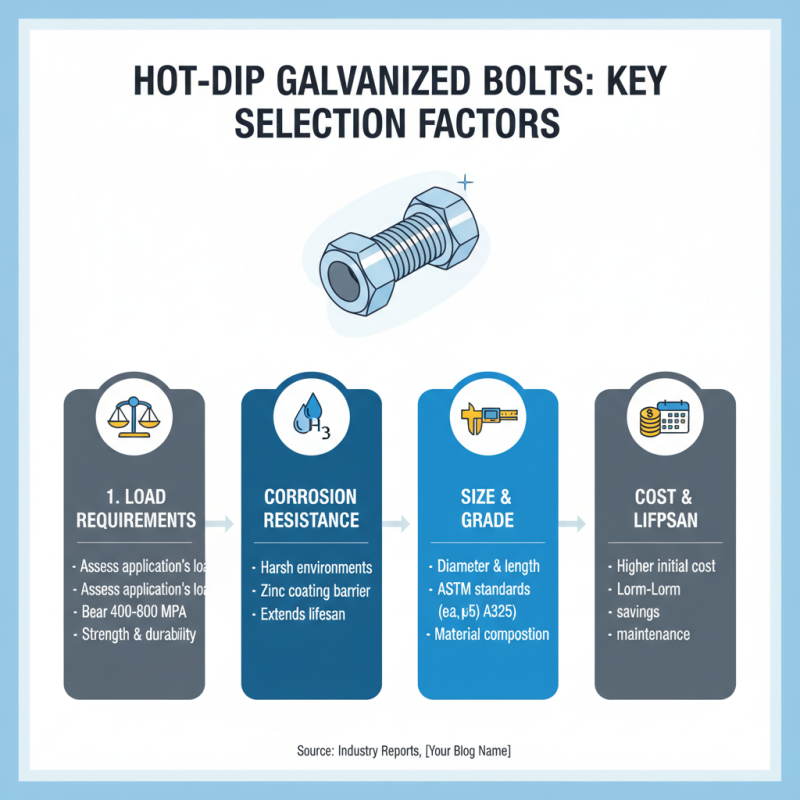
When selecting hot dip galvanized bolts for your project, various key factors play a crucial role. Firstly, understand the load requirements of your application. According to industry reports, galvanized bolts can typically bear loads ranging from 400 MPa to 800 MPa, depending on the size and grade. Assessing the exact load demands will help ensure the chosen bolts have the necessary strength and durability.
Next, consider the environmental conditions they will face. For example, if your project is near coastal areas, high salt exposure can accelerate corrosion. Research indicates that hot dip galvanized coatings significantly improve corrosion resistance. However, even the best coating may wear off over time. Be mindful that not all galvanized bolts offer the same level of protection.
Another important element is the thread engagement. Proper engagement can enhance the overall strength of the bolted joint. Yet, improper fit might lead to bolt failure. Aim for at least 2 to 3 threads visible after tightening. Additionally, ensure the correct diameter and length are chosen. Using a bolt that is too short may reduce joint integrity, while an overly long bolt can lead to unnecessary complications. Focus on these critical aspects to avoid potential issues in your project.
Assessing the Appropriate Size and Strength Specifications
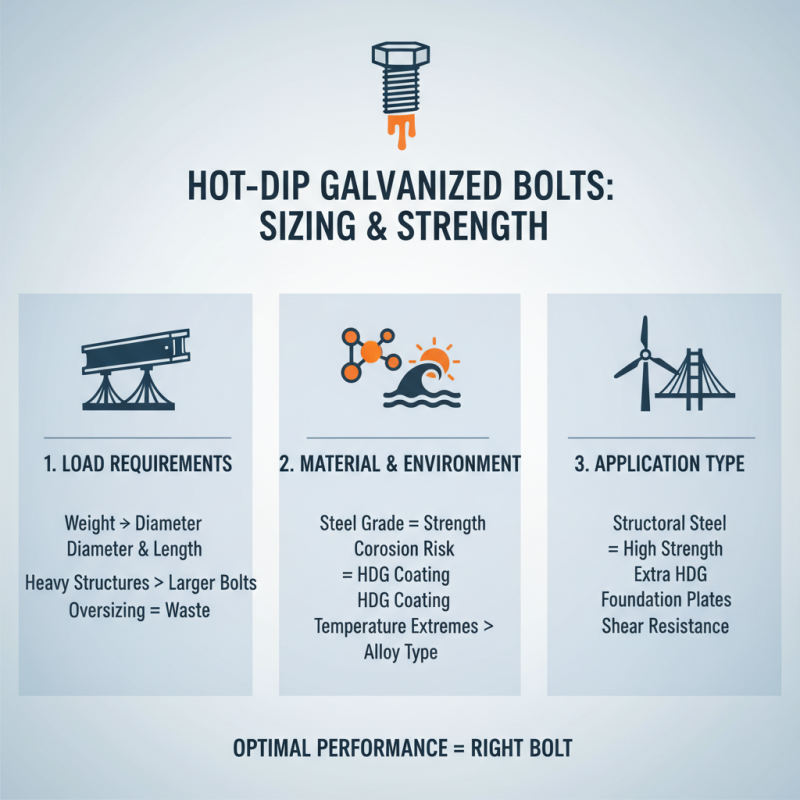
Choosing the right size and strength for hot dip galvanised bolts is essential for any project. Start by considering the load requirements. The weight the bolts need to support directly influences their diameter and length. For heavy structures, larger bolts are necessary. However, oversizing can be wasteful and unnecessary.
Strength specifications are equally critical. Different applications require various tensile and shear strengths. Analyze the environment where the bolts will be used. Corrosion resistance might be more crucial in some projects, while others may need high-stress tolerances. Don't overlook these details, as they can impact the project's longevity.
When selecting bolts, remember that even the smallest detail matters. A miscalculation in size or strength can lead to significant issues down the line. Testing and validating your choices can help identify weaknesses. Ensure that you continually reassess your needs as the project evolves. Balancing strength and size is a process; it's okay to adjust your approach as new information arises.
Evaluating Environmental Conditions for Optimal Bolt Performance
When selecting hot dip galvanized bolts, understanding environmental conditions is crucial. Bolts are subjected to various challenges, including moisture, temperature, and chemical exposure. In coastal areas, salty air can speed up corrosion. Rain and humidity also contribute to rust formation. Be cautious of these elements when choosing bolts for your project.
Different projects may require different bolt sizes and coatings. In some cases, standard galvanized bolts may not suffice. You might consider additional protective measures. This could include applying a sealant or choosing a thicker galvanization layer. Each layer adds a bit more protection against the elements.
It’s essential to evaluate your project’s specific conditions. Are there significant temperature fluctuations? Will the bolts face exposure to harsh chemicals? Reflecting on these questions can save time and resources later. The wrong choice can lead to premature failure, causing delays and additional costs. Always think about the long-term impact of your decisions.
Comparing Cost and Quality of Hot Dip Galvanized Bolts from Suppliers
When selecting hot dip galvanized bolts, it's crucial to consider both cost and quality from various suppliers. A recent industry report indicates that prices for galvanized bolts can range significantly, often between $0.10 and $2.50 per bolt. Quality varies too, with some suppliers yielding better corrosion resistance due to superior zinc coating processes.
It's essential to analyze the zinc thickness on the bolts. Research shows that a minimum of 3.9 mils is needed for effective protection in rural environments, while urban settings call for at least 5.0 mils. Choosing bolts that meet these standards can lead to long-term savings. However, some suppliers may offer lower prices with less reliable coatings, potentially leading to premature failure. This is an important aspect that requires careful evaluation.
Additionally, the source of steel can affect quality. Reports suggest that bolts made from high-grade steel ensure better structural integrity. While cheaper options might save money upfront, they can result in higher replacement costs down the line. Balancing price with these factors is vital for a successful project outcome. Always verify suppliers' specifications and warranties to make an informed decision.
How to Choose Hot Dip Galvanised Bolts for Your Project? - Comparing Cost and Quality of Hot Dip Galvanized Bolts from Suppliers
| Supplier |
Cost per 100 bolts ($) |
Coating Thickness (microns) |
Tensile Strength (MPa) |
Quality Rating (1-5) |
| Supplier A |
45 |
80 |
600 |
4 |
| Supplier B |
50 |
85 |
620 |
5 |
| Supplier C |
48 |
75 |
580 |
3 |
| Supplier D |
52 |
90 |
640 |
4 |
| Supplier E |
53 |
70 |
570 |
3 |