Leave Your Message

China Top Cast In Place Anchors Manufacturers?

Choosing China’s top Cast-In-Place Anchors manufacturers requires more than comparing prices or browsing polished product pages. These anchors become part of the concrete structure before hardening. Their performance depends on steel grade, embedment depth, positioning accuracy, concrete strength, and installation control. A small deviation at the jobsite can affect load transfer, edge distance, and long-term reliability.

Dr. Rolf Eligehausen, a leading researcher in concrete anchorage, states, “Anchor safety depends on the concrete, the load, and the installation.” This principle should guide every supplier evaluation. Strong manufacturers usually provide material certificates, dimensional inspection records, welding procedures, corrosion protection options, and traceable batch information. They should also understand relevant requirements, such as ACI 318, EN 1992-4, and project-specific engineering specifications. Certification alone is not enough. Sometimes, the documents look impressive, while production details remain unclear.

This guide examines leading Chinese manufacturers through a practical lens. It considers design capability, factory equipment, quality assurance, customization, testing support, delivery consistency, and after-sales communication. Site experience matters too. A manufacturer may produce accurate anchors, yet fail to control labeling or packaging during a busy shipment. That weakness can create confusion before installation begins. No supplier is perfect. Buyers should ask direct questions, request samples, review inspection evidence, and verify whether the proposed Cast-In-Place Anchors match actual project loads. The best choice is rarely the cheapest quotation. It is the supplier that can demonstrate repeatable quality, clear technical communication, and responsibility from drawing approval to concrete placement.

China Top Cast In Place Anchors Manufacturers?

What Are Cast-in-Place Anchors and How Do They Work?

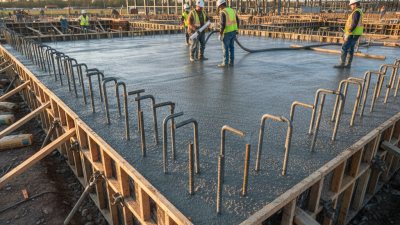
Cast-in-place anchors are steel components installed before concrete hardens. They may include anchor rods, headed studs, plates, or reinforcing cages. After placement, fresh concrete flows around the embedded steel. Once cured, the concrete grips and supports the anchor. Loads move through bearing, bond, and surrounding concrete confinement.

Installation requires accurate positioning. A rigid template keeps bolt spacing and elevation stable during pouring. Workers should check thread protection, embedment depth, edge distance, and concrete cover before placement. Controlled vibration helps remove voids around the anchor. Excessive vibration, however, may shift a poorly secured assembly. That simple mistake can create serious alignment problems.

When evaluating cast-in-place anchor manufacturers in China, request material certificates, dimensional inspection records, weld quality reports, and traceable production batches. Experienced suppliers should explain steel grades, corrosion protection, tolerances, and testing methods clearly. Pull-out or proof testing may support verification, but the structural engineer must define suitable procedures. Field inspections often find small offsets that drawings do not show. A practical supplier should respond with measured corrections, not vague promises. The process is not perfect. Design review, factory control, and careful installation must work together.

Cast-in-Place Anchor Rods: ASTM F1554 Minimum Tensile Strength

Cast-in-place anchors are positioned in fresh concrete before it hardens. Their embedded portions transfer tension and shear forces into the concrete through bond, bearing, and mechanical interlock. The chart compares the minimum tensile strength requirements for ASTM F1554 anchor-rod grades; actual connection capacity also depends on embedment depth, edge distance, concrete strength, spacing, and installation quality.

Data source: ASTM F1554, Specification for Anchor Bolts, Steel, 36, 55, and 105 ksi Yield Strength.

Key Types of Cast-in-Place Anchors Made in China

China’s cast-in-place anchor sector serves infrastructure, industrial buildings, bridges, and equipment foundations. Oxford Economics’ Global Construction Futures report projects global construction output to grow by about 2.4% annually through 2028. That demand favors dependable embedded connection systems, not simply low-cost steel parts. China produced approximately 1.005 billion tonnes of crude steel in 2024, according to the World Steel Association. This capacity supports broad material availability, but production volume never replaces traceable testing.

Key types of cast-in-place anchors made in China include headed studs, J-bolts, L-bolts, straight anchor rods, plate anchors, and anchor channels. Headed studs transfer tension and shear through welded heads inside concrete. They suit steel columns, machinery bases, and composite structures. J-bolts and L-bolts are practical for lighter foundations, sign supports, and small equipment. Straight rods with welded plates provide stronger pull-out resistance when deeper embedment is required. Anchor channels offer adjustable fixing points, especially in precast and façade applications.

A reliable supplier should provide mill certificates, dimensional inspection records, weld procedures, and tensile test results. Testing may reference ASTM F1554, ASTM A307, EN 1090, or project-specific specifications. Galvanized and stainless options help exposed installations, though coating thickness must be verified on actual batches. Site conditions matter. Poor positioning or inadequate concrete consolidation can weaken a correctly manufactured anchor. One overlooked detail is installation tolerance; even a strong anchor fails when threads are damaged or the template shifts. Supplier claims deserve checking.

China’s Leading Cast-in-Place Anchor Manufacturers

China’s Leading Cast-in-Place Anchor Manufacturers

China’s leading cast-in-place anchor manufacturers serve demanding construction and infrastructure projects. Their products support concrete connections, steel framing, facade systems, and equipment foundations. Experienced manufacturers usually control steel selection, thread accuracy, welding, and surface treatment in-house. They also provide material certificates, dimensional reports, and batch traceability. These documents help engineers verify performance before installation.

In practical project reviews, small details often decide anchor reliability. Hole spacing, embedment depth, and concrete strength must match the approved design. Reputable factories can support custom lengths, thread types, plates, and corrosion-resistant finishes. They should explain testing methods clearly, not hide behind general claims. However, no manufacturer is perfect. I have seen drawings require revision after a site measurement changed. Good suppliers respond quickly and record every adjustment.

Tips: Ask for recent inspection records, sample approvals, and production photos. Confirm tensile, shear, and pull-out testing requirements early. Check packaging, thread protection, and delivery labels before shipment. A factory visit can reveal more than a polished catalog. Compare technical support, not only unit price. Lower cost may create higher installation risk. Review tolerances carefully, because “close enough” is sometimes not enough.

How Cast-in-Place Anchors Are Manufactured and Tested

China Top Cast In Place Anchors Manufacturers?

Cast-in-place anchors begin with traceable steel bars. Manufacturers verify the heat number, chemical composition, diameter, and straightness before cutting. Headed anchors usually receive a forged head, while threaded rods receive rolled or machined threads. Each batch is checked with thread gauges and calibrated length tools. ASTM F1554 specifies 36 ksi minimum yield strength and 58 ksi minimum tensile strength for Grade 36 anchors. Grade 55 requires 55 ksi yield and 75 ksi tensile strength. These figures matter during structural design.

Testing continues beyond the production line. Tensile tests confirm strength and elongation. Proof-load checks reveal weak threads or poor head formation. Hardness testing can expose inconsistent heat treatment. Coating thickness also needs measurement, especially when corrosion protection is specified. ACI 318-19 Chapter 17 evaluates anchor tension, shear, edge distance, spacing, and concrete breakout. Full-scale tests should represent real concrete conditions, including cracking and installation tolerances. A clean laboratory result is not enough. Field variability remains a difficult question.

Tips: Request mill certificates, batch traceability, dimensional records, and independent test reports. Check whether the test method matches the project design. Do not judge quality by appearance alone. A bright coating may hide thread damage. ASTM F1554 data should match the approved grade, not merely the supplier’s description. One missed inspection can weaken confidence.

How to Choose a Reliable Chinese Anchor Manufacturer

Choosing a Reliable Chinese Cast-In-Place Anchor Manufacturer

A dependable anchor manufacturer should understand your project, not only your drawing. Share concrete strength, anchor size, embedment depth, load direction, and exposure conditions. A serious supplier will ask questions before offering a price. That matters.

Visit the factory when possible, or request a live video inspection. Check steel storage, cutting equipment, welding areas, and dimensional inspection points. Ask for material certificates and batch traceability. Each anchor should connect to a clear production record. Sample testing is useful, but it cannot replace process control. Request tensile, pull-out, and coating reports from qualified laboratories when required. Verify the test method and sample identity carefully.

Communication often reveals more than a polished brochure. Can the technical team explain tolerances in plain language? Do they respond with drawings, inspection plans, and realistic delivery dates? Confirm packaging details, because bent threads or missing accessories can delay installation. Also review their experience with similar concrete environments and project quantities.

Do not choose by price alone. A low quotation may exclude testing, packaging, or corrective work. I have seen buyers focus on certificates while overlooking thread fit and installation access. That mistake is easy to repeat. Ask for production samples, approve critical dimensions, and record every change in writing. A reliable manufacturer welcomes reasonable checks, although no factory is perfect. Your review should remain practical, documented, and willing to question convenient answers.

China Top Cast In Place Anchors Manufacturers? - How to Choose a Reliable Chinese Anchor Manufacturer

Evaluation Dimension Reliable Technical Requirement Common Data or Standard Reference What the Buyer Should Verify
Anchor Type Choose the configuration according to the connection, load direction, installation method, and available embedment depth. J-bolts, L-bolts, headed anchor bolts, straight threaded rods with nuts, and plate anchors are commonly used cast-in-place configurations. Confirm the drawing, thread length, hook or head geometry, plate dimensions, and whether the anchor is intended for tension, shear, or combined loading.
Typical Diameter Range The diameter must be selected through structural design rather than by product availability alone. Common structural anchor bolt diameters include approximately M12 to M48; larger sizes may be produced for heavy industrial applications. Request dimensional capability limits and verify that the manufacturer can maintain the specified diameter, pitch, thread length, and tolerances.
Metric Thread Standard Threads should match the project specification and the supplied nuts and washers. ISO metric coarse threads are commonly specified, such as M16 × 2.0, M20 × 2.5, M24 × 3.0, and M30 × 3.5. Check nominal diameter, pitch, thread tolerance, effective thread length, gauge inspection, and nut compatibility.
Material Grade Material strength and ductility should meet the structural design requirements. Common references include ASTM F1554 Grades 36, 55, and 105; ISO 898-1 property classes such as 5.8, 8.8, and 10.9; and equivalent national or regional specifications. Require heat or batch traceability, material certificates, chemical composition, yield strength, tensile strength, and elongation results.
Mechanical Properties Testing should be performed on the actual supplied material or a traceable production batch. For example, ISO 898-1 property class 8.8 fasteners have a nominal tensile strength of 800 MPa and a nominal yield ratio of 0.8. Confirm whether reported values are nominal or test results and ensure the selected grade is suitable for the design loads and service temperature.
Embedment Length Embedment must be designed for concrete breakout, pullout, steel strength, pryout, and edge-distance conditions. There is no universal embedment length. The required value depends on anchor diameter, concrete strength, cracked or uncracked concrete, edge distance, spacing, and applied load. Ask for design calculations based on the applicable concrete design code rather than accepting a fixed length for every application.
Concrete Compatibility The anchor design must be compatible with the concrete strength, reinforcement arrangement, curing condition, and installation sequence. ACI 318 and EN 1992-4 provide design provisions for fastenings and anchors in concrete. Verify minimum concrete strength, required cover, reinforcement clearance, edge distance, anchor spacing, and concrete crack assumptions.
Dimensional Accuracy Anchor location and projection are critical because cast-in-place anchors are installed before concrete placement. Important dimensions include overall length, hook or head position, exposed thread length, center-to-center spacing, and installation template position. Require approved drawings, inspection checkpoints, calibrated measuring equipment, and a dimensional inspection report for each production lot.
Surface Finish Select the finish according to corrosion exposure, service life, and compatibility with the concrete environment. Common options include plain steel, hot-dip galvanized steel, electroplated zinc, and stainless steel. Hot-dip galvanizing typically produces a thicker zinc coating than electroplating. Confirm coating standard, coating thickness, thread treatment, repair method for damaged areas, and whether coating affects nut installation.
Corrosion Protection Outdoor, coastal, chemical, and high-humidity environments require a documented corrosion-control strategy. Stainless steel grades such as 304 and 316 are commonly considered for corrosive environments, while galvanized carbon steel is often used for general outdoor exposure. Evaluate chloride exposure, chemical contact, temperature, galvanic compatibility, drainage, and the expected maintenance interval.
Welding Quality Welded plates, reinforcement bars, or positioning components must be produced with controlled welding procedures. Relevant controls may include qualified welding procedures, welder qualification, visual inspection, and non-destructive testing when specified. Request welding procedure documents, weld inspection records, acceptance criteria, and evidence that distortion will not affect installation accuracy.
Load Test Capability Testing should reflect the intended failure mode and project requirements. Pull-out, tensile, proof-load, hardness, torque, and dimensional tests may be applicable depending on the anchor design and governing specification. Confirm test method, sampling frequency, loading rate, acceptance criteria, calibration certificates, and independent laboratory involvement when required.
Quality Documentation A traceable document package reduces the risk of receiving nonconforming anchors. Typical documents include a commercial invoice, packing list, material certificate, dimensional report, coating report, inspection plan, and certificate of conformity. Check that heat numbers, batch numbers, quantities, test results, and product markings are consistent across all documents.
Marking and Traceability Products should be identifiable from manufacturing through delivery and site installation. Traceability may include heat number, batch number, grade, diameter, length, and production date. Verify permanent or durable marking, batch segregation, labeling accuracy, and retention of production records.
Packaging and Protection Packaging should prevent thread damage, corrosion, mixing of sizes, and loss of small components. Typical protection includes thread caps, separators, moisture-resistant wrapping, strong pallets, and weather-resistant labels. Confirm package weight, pallet dimensions, lifting method, corrosion protection during ocean transport, and spare-component quantities.
Production Capacity Capacity should be assessed against the required quantity, geometry, delivery schedule, and inspection workload. Capacity is project-specific and should be confirmed using a production schedule rather than a general monthly claim. Review machinery, subcontracting controls, raw-material availability, bottleneck processes, quality staffing, and contingency planning.
Sample Approval A production sample should be approved before full-scale manufacturing. Sample approval normally covers material, dimensions, thread fit, surface finish, welds, marking, and packaging. Use an approved sample, signed drawing, inspection checklist, and agreed deviation procedure as the reference for mass production.
Manufacturing Tolerances Tolerances should be defined by the project drawing or applicable standard, not left to informal agreement. Control dimensions may include bolt diameter, length, thread position, hook angle, plate thickness, hole location, and straightness. Request a tolerance table and confirm how out-of-tolerance products will be identified, segregated, reworked, or rejected.
Commercial Reliability A dependable supplier should provide clear specifications, stable communication, and transparent change control. Reliable purchasing records include a detailed quotation, technical data sheet, inspection plan, delivery schedule, and written warranty terms. Assess response time, engineering support, change-notification procedures, after-sales handling, and the ability to provide consistent repeat orders.
Final Selection Rule Choose the supplier that can demonstrate technical compliance and traceability, not simply the lowest unit price. Recommended minimum: approved drawing, verified material grade, documented inspection, suitable corrosion protection, and batch traceability. Compare suppliers using the same specification, quantity, inspection level, packaging requirement, delivery term, and acceptance criteria.