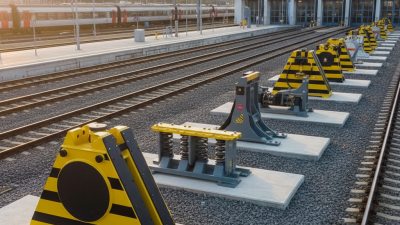
China has become an important sourcing market for railway infrastructure components, including Rail Crossings for heavy-haul, urban, industrial, and standard-gauge networks. This guide introduces leading Chinese manufacturers and suppliers with practical procurement needs in mind. It considers product design, casting or forging methods, machining accuracy, material selection, and delivery capability. Rail crossings must withstand repeated wheel impact, vibration, weather exposure, and demanding traffic cycles. Small dimensional errors can create noise, uneven wear, or costly maintenance problems.
The strongest suppliers usually provide detailed drawings, material certificates, inspection records, and traceability information. Their production lines may include CNC machining, heat treatment, ultrasonic testing, and full-size assembly checks. Buyers should also review rail profiles, crossing angles, axle loads, fastening systems, and applicable railway standards before placing an order. Factory audits can reveal more than a polished catalog. Look closely at storage conditions, measurement equipment, welding quality, and corrective-action records. Field experience matters.
No supplier is perfect.
Some manufacturers offer competitive prices but limited technical support. Others have strong engineering teams but longer production schedules. This overview compares those practical differences without treating marketing claims as proven performance. It also highlights communication quality, customization experience, export documentation, packaging, and after-sales support. A reliable partner should explain limitations clearly and recommend suitable solutions rather than promise universal compatibility. Conditions vary by project. The final choice should follow verified samples, independent inspection where appropriate, and documented acceptance criteria. That approach supports safer railway operations and more predictable long-term maintenance.
Rail crossings connect intersecting tracks while guiding wheel flanges through a precise path. Common types include diamond crossings, turnout frogs, slip crossings, and movable-point crossings.
A fixed diamond crossing handles two routes crossing at the same level. A turnout frog directs wheels from one rail line toward another. Movable-point designs reduce the open gap, improving wheel support and reducing impact forces.
The U.S. Federal Railroad Administration’s 2023 Highway-Rail Crossing Inventory recorded more than 200,000 highway-rail crossings nationwide. This figure shows why crossing design must consider traffic, speed, drainage, and maintenance access.
UIC Railway Statistics 2023 reports more than one million route-kilometres in worldwide railway networks. Even small geometry errors can affect extensive operating systems.
It happens quietly.
Crossings typically use manganese steel, alloy steel, or specialized cast components. Their functions extend beyond simple track connection. They transfer axle loads, control wheel movement, preserve gauge, and limit vibration at the crossing nose.
Engineers inspect flange-way width, surface wear, weld condition, fastening tightness, and impact marks. Non-destructive testing can identify internal cracks before visible damage develops.
However, published statistics use different definitions, so direct comparisons need caution. A supplier may offer impressive fatigue data, but field performance still depends on installation quality, traffic loads, and inspection discipline.
That detail is often underestimated.
China Top Rail Crossings Manufacturers and Suppliers
Key Standards for Rail Crossing Design and Production
Rail crossing design begins with the operating environment, not a catalogue drawing. Engineers assess axle loads, train speed, road traffic, climate, drainage, and maintenance access. The crossing must preserve the rail profile while providing a safe, stable surface for vehicles. Flangeway width and depth need controlled tolerances. Small errors can create wheel impacts, vibration, and premature wear. Design teams should follow applicable railway, road, welding, material, and safety standards in the installation country. Local authority approval also matters.
Tips: Measure the rail seat, flangeway, and road level on site. Use full-size trial assembly when possible. Check drainage after heavy rain. Record every inspection.
Production quality depends on traceability and repeatable testing. Suppliers should control steel grades, casting or forming processes, weld quality, surface treatment, and dimensional inspection. Each component needs an identifiable batch record. Load testing, fatigue assessment, corrosion checks, and installation trials provide stronger evidence than appearance alone. Experienced manufacturers also review bolt torque, expansion gaps, and interface details with signaling equipment. These points are often missed. No drawing survives unchanged in every location. Field feedback should revise future designs, even when the first installation performs well.
China’s leading rail crossing manufacturers combine practical engineering with large-scale production experience. They supply warning signals, crossing gates, track circuits, control cabinets, and related safety equipment. Experienced manufacturers study traffic volume, track geometry, climate, and maintenance access before recommending a system. This approach helps buyers avoid equipment that looks suitable but performs poorly in local conditions. Reliable suppliers also provide inspection records, installation guidance, spare parts, and technical training for railway teams.
Tips: Ask for test reports, material specifications, and clear warranty terms. Check whether the supplier has completed similar crossings. Request sample drawings before production. Confirm response times for replacement parts. Small details matter, especially during winter, heavy rain, or dusty construction periods.
A professional manufacturer should explain how each component works, not only quote a low price. Look for controlled assembly, traceable components, and documented quality checks. Field testing should cover gate movement, signal visibility, alarm volume, and emergency operation. Some suppliers may offer impressive catalogs, yet their after-sales support can be less developed. This is worth examining honestly. No manufacturer gets every project perfect. Strong suppliers listen to site feedback and adjust designs when conditions change. Buyers should also review local railway requirements and conduct acceptance checks before regular operation.
Evaluating Chinese rail crossing suppliers requires more than comparing quoted prices. Start with the supplier’s engineering records, production capacity, and experience with similar railway environments. Ask for drawings, material specifications, inspection plans, and installation references. A reliable supplier should explain why each component suits your track gauge, traffic load, climate, and maintenance schedule.
Visit the factory when possible. Observe steel cutting, welding, surface treatment, assembly, and final testing. Check whether workers use calibrated instruments and documented procedures. Request traceable records for critical materials. Independent testing can verify strength, dimensions, wear resistance, and electrical performance where applicable. Do not accept vague claims such as “international quality.”
Communication is equally important. Technical answers should be clear, measured, and supported by evidence. Confirm lead times, packaging details, spare parts, warranty terms, and after-sales support in writing. Sample evaluation helps, but one successful sample does not prove stable mass production. A polished factory tour can still hide weak process control. I once underestimated this risk. Supplier audits should include corrective-action records and honest discussion of previous defects. Price matters, but a cheaper crossing may create higher maintenance costs, delays, or safety concerns later. Check export experience and compliance documentation for the destination market. Even experienced buyers can miss small details, such as drainage design or fastener compatibility.
This recommended evaluation framework prioritizes safety and regulatory compliance, followed by product quality, engineering capability, manufacturing capacity, testing traceability, delivery performance, and after-sales support. Buyers should verify certifications, inspection records, project references, factory capability, and service terms before awarding a contract.
China Top Rail Crossings Manufacturers and Suppliers
Purchasing rail crossing equipment from China requires more than comparing unit prices. Define the application, axle loads, track gauge, climate, and expected service life. Request drawings, material certificates, load-test reports, and installation instructions before approving a quotation. Crossing panels, fastening systems, drainage parts, and warning interfaces should match the existing track design.
A reliable supplier should explain tolerances, surface treatment, replacement methods, and inspection stages. Ask for production samples before mass manufacturing. During quality control, check dimensions, weld appearance, coating thickness, rubber hardness, and bolt compatibility. Independent inspection can verify these points before shipment. Photographs help, but they cannot replace physical testing.
Export planning needs equal attention. Confirm the commercial invoice, packing list, certificate of origin, test records, and transport documents. Wooden crates may require compliant treatment and clear marking. Use moisture barriers for long sea journeys. Agree on Incoterms, spare-part quantities, warranty response time, and responsibility for damaged cargo. I would also request a small trial order. It reveals packaging weaknesses early. No checklist is perfect. A supplier may pass factory inspection yet struggle with field installation. Keep communication records, review translated drawings carefully, and ask the final user to approve every critical interface before production.
| Evaluation Area | Product or Data Dimension | Typical Industry Information | Recommended Purchasing and Quality-Control Checks | Export Considerations |
|---|---|---|---|---|
| Product Scope | Rail crossing system type | Common products include rubber crossing panels, precast concrete panels, composite panels, steel supporting parts, road warning assemblies, and drainage components. | Confirm whether the quotation covers panels only or a complete system, including supports, fasteners, edge elements, and installation accessories. | Use a detailed packing list that identifies each component by part number, material, quantity, and package. |
| Application | Crossing usage | Design requirements vary for public roads, industrial roads, farm access roads, pedestrian crossings, and temporary construction crossings. | Provide rail section details, road width, crossing angle, traffic category, axle-load requirements, drainage conditions, and expected service environment. | Destination-country railway and road authorities may require separate approval for public-road installations. |
| Dimensions | Panel and track geometry | Important dimensions include rail profile, track gauge, crossing width, panel length, panel thickness, flange-way clearance, and approach-road connection details. | Require approved drawings, dimensional inspection reports, installation tolerances, and a first-article sample before bulk production. | Confirm that metric drawings, imperial drawings, or both are available when required by the importing market. |
| Material Selection | Panel and support materials | Typical materials include vulcanized rubber, engineered polymer or composite materials, reinforced concrete, galvanized steel, and coated structural steel. | Request material certificates, composition information, hardness or strength data, resistance-to-aging evidence, and compatibility information for the intended rail environment. | Check whether timber, rubber, chemicals, or treated materials are subject to import, fumigation, or environmental declarations. |
| Load Performance | Traffic and axle-load capacity | Performance depends on axle load, vehicle speed, traffic frequency, support conditions, subgrade quality, and the number of rails crossed. | Require the supplier to state the design load and test method. Do not compare load figures unless the test conditions and support configuration are equivalent. | Match the declared capacity with the purchaser’s infrastructure specification and the destination railway authority’s requirements. |
| Surface Safety | Slip resistance and drainage | Road and pedestrian surfaces generally require adequate wet slip resistance, positive drainage, and a profile that minimizes water retention and debris accumulation. | Review surface texture, drainage channels, water-flow paths, edge transitions, and wet-condition test results where applicable. | Surface-performance documentation may be requested during project approval or site acceptance. |
| Dimensional Quality | Rail-seat and flange-way accuracy | Accurate rail-seat geometry and sufficient flange-way clearance are essential for safe wheel passage and maintenance access. | Use inspection gauges or calibrated measuring equipment. Record rail-seat height, panel alignment, joint gaps, and flange-way dimensions for each production lot. | Include inspection records in the technical file and retain traceability from the inspected lot to the shipping package. |
| Durability | Weathering, temperature, and chemical resistance | Outdoor crossings can be exposed to ultraviolet radiation, rain, freeze-thaw cycles, de-icing salts, oils, fuel, and repeated impact or vibration. | Request relevant accelerated-aging, low-temperature, high-temperature, abrasion, compression-set, corrosion, or chemical-resistance data according to the material used. | Confirm the product’s declared operating temperature range and storage requirements for the destination climate. |
| Fasteners | Bolts, anchors, clips, and connection parts | Fastener performance depends on grade, coating, preload, embedment, corrosion exposure, and compatibility with the rail and supporting structure. | Verify fastener grade, coating type, torque requirements, thread accuracy, batch traceability, and corrosion-protection method. | Separate metal fasteners from moisture-sensitive materials during packing and protect coated surfaces from abrasion and salt exposure. |
| Manufacturing Control | Process consistency | Key controls may include mold or tooling inspection, rubber or polymer formulation control, concrete batching, reinforcement placement, curing, surface finishing, and final assembly. | Request a quality plan, process flow chart, inspection and test plan, nonconformance procedure, and calibration records for measuring equipment. | For repeat orders, require the supplier to notify the buyer before changing material, tooling, production location, or critical subcontractors. |
| Testing | Factory and third-party inspection | Depending on the project, testing can include dimensions, appearance, hardness, compressive strength, flexural strength, load performance, abrasion, corrosion protection, and fatigue-related checks. | Define acceptance criteria in the purchase contract and identify which tests require witnessed inspection, independent laboratory testing, or batch sampling. | Ensure reports include test date, sample identification, applicable method, equipment details, results, and authorized signatures. |
| Documentation | Technical and quality documents | A complete documentation package commonly includes approved drawings, bill of materials, material certificates, inspection reports, test reports, installation instructions, and maintenance guidance. | Make document submission and approval a formal milestone before production and shipment. | Prepare commercial invoice, packing list, certificate of origin when required, transport documents, insurance documents, and any destination-specific certificates. |
| Packaging | Protection during transport | Panels and accessories require protection against impact, distortion, moisture, contamination, and surface damage during inland transport, container loading, and unloading. | Check pallet strength, lifting points, edge protection, moisture barriers, load restraint, package labels, and maximum stacking limits. | Wood packaging used for international shipment may need treatment and marking in accordance with ISPM 15 requirements. |
| Commercial Terms | Quotation and total landed cost | The purchase price may exclude tooling, design work, testing, packaging upgrades, inland transport, export handling, freight, insurance, duties, and installation support. | Request a line-item quotation with Incoterms, currency, validity period, payment milestones, warranty scope, spare parts, and exclusions. | Compare suppliers on total landed cost rather than unit price alone, including customs duties, port charges, inland delivery, and local compliance costs. |
| Production Planning | Lead time and order quantity | Lead time is influenced by tooling status, material availability, product customization, testing requirements, production capacity, and seasonal logistics conditions. | Obtain a written production schedule with drawing approval, sample approval, manufacturing, inspection, packing, and dispatch milestones. | Allow additional time for export documentation, booking availability, customs clearance, transshipment, and destination-site coordination. |
| Supplier Assessment | Capability and traceability | A reliable supplier should be able to demonstrate relevant production equipment, engineering support, quality personnel, documented procedures, and traceable production records. | Conduct document review, factory audit, sample evaluation, reference-project verification, and pre-shipment inspection before approving regular orders. | Confirm the legal exporter, manufacturing location, authorized signatory, after-sales contact, and responsibility for warranty claims. |
| Installation | Site preparation and method | Installation normally depends on rail condition, subgrade stability, drainage, support frames, road approach levels, and access for lifting equipment. | Require installation drawings, foundation requirements, tightening instructions, alignment tolerances, lifting guidance, and recommended inspection intervals. | Clarify whether the supplier provides remote technical support, on-site supervision, training, or replacement components. |
| Warranty | Defect responsibility and service | Warranty conditions should distinguish manufacturing defects from damage caused by improper installation, overloading, unauthorized modification, poor drainage, or abnormal site conditions. | Specify warranty duration, claim evidence, response time, replacement procedure, spare-parts availability, and responsibility for removal and reinstallation. | Define the governing law, dispute-resolution method, claim language, and delivery responsibility for warranty replacements. |
| Compliance | Destination-market requirements | Rail-crossing requirements differ by country, railway operator, road authority, infrastructure owner, and project type; there is no universal approval route. | Obtain the purchaser’s technical specification before selecting the design and confirm all mandatory tests, certificates, drawings, and approval submissions. | Use the destination country’s customs classification and regulatory requirements for the final product configuration, materials, and accessories. |
| Recommended Decision | Supplier-selection priority | Technical compliance, documented quality control, traceability, delivery reliability, installation support, and total landed cost should be evaluated together. | Use a weighted comparison matrix and reject quotations that lack clear specifications, test evidence, delivery commitments, or responsibility boundaries. | Best practice: approve by documented evidence |