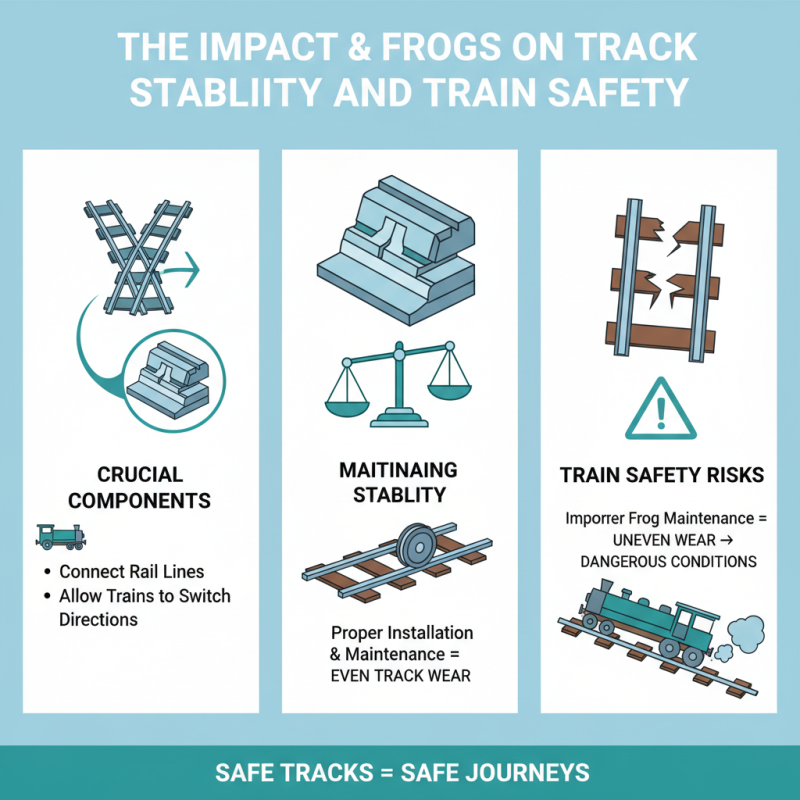
Railway frogs play a critical role in the stability of railway tracks. These specialized track components manage train transitions at junctions. Understanding their design and function is essential for ensuring safety and efficiency in rail transport.
The railway frog allows smooth movement from one track to another. It consists of two main parts—rails and a base. This component's quality and maintenance significantly affect track performance. If a frog is worn or damaged, it can lead to train derailments. Regular inspections are necessary to prevent these issues.
Despite their importance, many people overlook railway frogs. They may seem minor, but their contribution to track stability is significant. Awareness and education about these components are vital. Knowledge leads to better maintenance practices. This understanding helps in making informed decisions for railway safety.
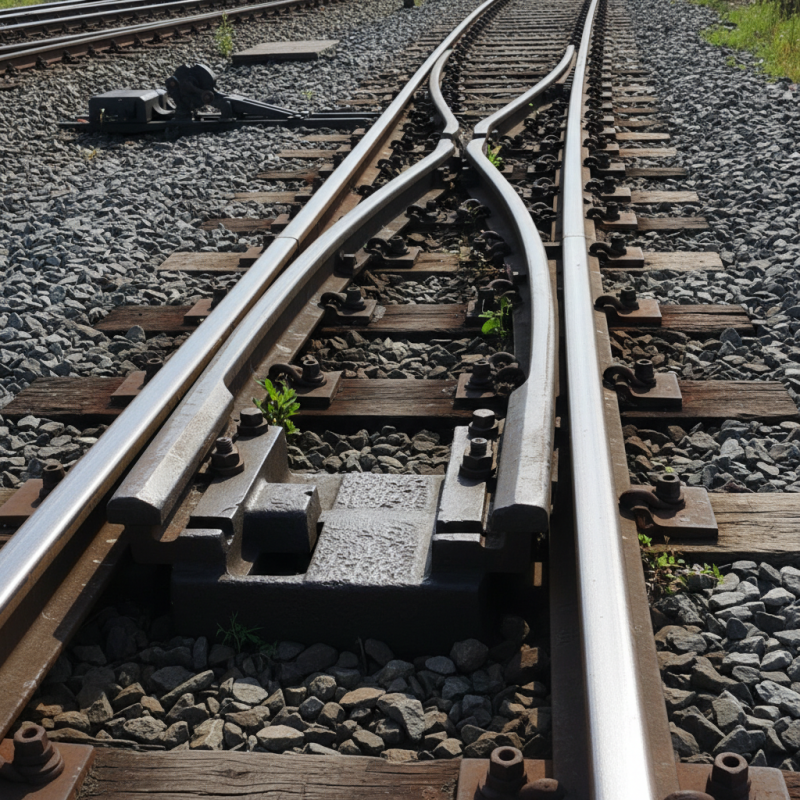
Railway frogs play a critical role in maintaining track stability. They are used at switches and crossings, enabling smooth transitions for trains. According to industry reports, over 30% of rail incidents are linked to poor switch maintenance. This highlights the importance of railway frogs in overall safety.
Frogs are designed to accommodate the natural movement of trains. They allow wheels to shift from one track to another, ensuring efficient operation. A study from the Transportation Research Board noted that properly maintained frogs can reduce derailments by 40%. However, many rail networks overlook routine inspections, leading to potential hazards.
The construction of a frog involves precise engineering. Each component must withstand substantial stress. Despite robust designs, wear and tear can occur. Inspectors should regularly evaluate these components for wear. Understanding the definition and function of railway frogs is essential for safe train operations. Rail systems must prioritize their maintenance to ensure reliable performance.

Railway frogs are essential components in track systems. They allow trains to switch tracks smoothly while maintaining stability. Different types of frogs serve specific functions, which can greatly impact overall track performance.
One common type is the V-shaped frog. This design directs train wheels from one track to another with precision. It is often used at rail junctions. There are also acute-angled frogs, which fill gaps in tight curves. These minimize the angle of divergence, improving the ride quality for trains.
Another type, called compound frogs, facilitates more complex track layouts and helps in areas with limited space.
Despite their importance, frogs can wear down quickly. Operators must monitor them regularly for wear. Sometimes, misalignment occurs, affecting the entire track stability. Maintenance is crucial, yet often overlooked. This makes understanding each type of frog vital for railway systems. Regular checks and proper installation ensure safety and functionality in railway operations.
The design and construction of railway frogs play a crucial role in maintaining track stability. A frog, as a track component, allows trains to switch tracks smoothly. Its geometry and material choice influence train speed and safety. Engineers must consider several factors, including load distribution and wear resistance.
An effective frog design balances strength with flexibility. The frog must endure heavy loads yet provide agility for trains. Engineers often use high-strength steel for durability. The angle of the frog, known as the "frog angle," influences how smoothly the wheels transition. A poorly designed frog can lead to discomfort and even derailments.
However, challenges exist in frog construction. Variability in rail wear and environmental conditions can complicate maintenance. Engineers must regularly assess frogs to ensure functionality. Despite advanced design techniques, unforeseen issues may arise. Continuous reflection on these designs ensures improvements and adaptability in track engineering.
Railway frogs are crucial components of track systems. They connect different rail lines, allowing trains to switch directions. These junctions play a vital role in maintaining track stability. When frogs are not properly installed or maintained, they can lead to uneven wear on rail tracks. This can create dangerous conditions during train operations.
Track stability is essential for safe train travel. Frogs must withstand heavy loads and dynamic forces. A malfunction can cause derailments, endangering passengers and cargo. Insufficient inspections can overlook wear and tear in frogs. Regular maintenance is essential for safety. Trains can experience jolts or unexpected movements if frogs fail. These factors can disrupt service and compromise safety.
Using advanced materials in construction can enhance frog durability. However, every design has limitations. Focusing on reliability is vital, but sometimes compromises are made for costs. Engineers must balance innovation and practical needs. The best solutions require frequent assessments. Regular data collection helps identify weaknesses. Ultimately, the role of frogs in track stability is a matter of constant improvement.
Railway frogs play a crucial role in track stability, connecting different sections of rail. Their design helps trains transition smoothly while minimizing stress on the track. Regular maintenance is essential to ensure these components perform effectively over time. Without proper care, frogs can become a weak link, leading to increased wear and potential failures.
Inspection routines should include checking for wear and tear on the frog’s surface. Look for cracks, excessive wear, or misalignments. Maintaining proper alignment is vital for safe operations. Regularly lubricating the joints can minimize friction and enhance performance. These small details make a significant difference in maintaining track stability.
Members of the maintenance team must be trained to identify potential issues. Knowledge of the frog's mechanics is crucial. Utilizing technology, such as track monitoring systems, can aid in early detection of problems. However, relying solely on technology without experienced inspection can be risky. Continuous improvement of maintenance practices is necessary to adapt to changing conditions in rail operations.