Why Choose a Switch Stand for Railway Tracks?
A Switch Stand is a small but critical device used to operate railway track points. It connects the operator’s movement with the switch mechanism, guiding wheels toward one route or another. Its lever, handle, and locking features must work together with steady resistance and clear position indication. In practical railway yards, a reliable stand can make route changes more controlled, visible, and repeatable.
The choice depends on track layout, operating frequency, climate, maintenance plans, and safety requirements. A heavy-duty model may suit busy freight lines, while a simpler design may fit a low-use industrial spur. Field inspections often reveal details that product sheets miss, such as mud around the base, frozen linkages, or poor visibility at night. Small faults matter. They can increase effort and delay inspections.
Railway professionals usually compare durability, ergonomic operation, locking performance, and compatibility with the existing switch assembly. Material quality also matters where rain, snow, salt, or dust are common. However, no Switch Stand should be selected by appearance alone. Installation accuracy, regular lubrication, and proper adjustment influence long-term performance. This article examines why railway operators choose switch stands, how different designs support daily work, and which practical questions deserve attention before purchase. Some decisions remain imperfect. A stand that works well in one yard may perform poorly in another. Careful assessment is essential.
Railway Switch Stands: Definition and Basic Function
Why Choose a Switch Stand for Railway Tracks?
Railway Switch Stands: Definition and Basic Function
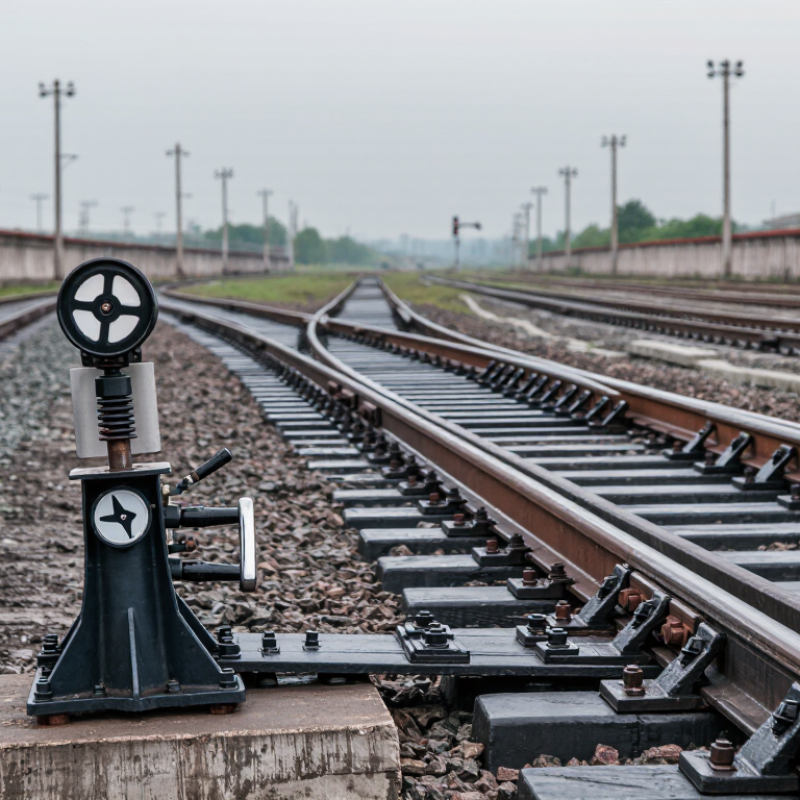
A railway switch stand is a trackside mechanism used to move and indicate a movable rail switch. The switch directs a train from one track to another. A lever, handle, or powered actuator connects to the switch points through linkage. When moved, the points shift against one rail, guiding the train along the selected route. A visible target or indicator may show the stand’s position to authorized railway staff.
Simple to recognize. Not simple to overlook.
The stand helps keep the switch points in the intended position, but it is only one part of a larger safety system. Its condition, linkage, locking features, and indicator must work together. Dirt, corrosion, loose fittings, or wear can affect movement or make a position harder to verify. Inspections and maintenance should follow the railway operator’s procedures and be handled by qualified personnel. A stand may look sturdy while a small fault remains hidden.
Tips: Look for clear position indications and signs of damage during authorized inspections. Never assume that a lever’s position alone confirms the track is safe; follow established verification procedures. A brief check matters.
How Switch Stands Control Track Point Movement
A switch stand controls the physical movement of railway points. When an operator throws the handle, the mechanism drives the switch rails across the track. A locking system then holds them firmly against the stock rail. The indicator shows the selected route. Small movement matters. A gap of only a few millimetres can affect wheel guidance, especially under heavy loads or poor weather.
Field maintenance teams inspect the throw, lock, fasteners, and drainage around each stand. They also check whether the handle reaches its full position. The U.S. Federal Railroad Administration’s safety data continues to identify track conditions among major derailment factors. That finding supports disciplined point inspection, not just signal monitoring. A switch can display the correct indication while its mechanical parts remain worn. That is an uncomfortable weakness.
Traffic pressure makes this control more important. The Office of Rail and Road reported approximately 1.7 billion passenger journeys on Britain’s mainline railway during 2023–24. Every movement through a turnout depends on secure point detection and restraint. Maintenance records should capture force measurements, alignment changes, and failed locking attempts. Human error still deserves attention. Clear labels, safe operating height, and visible position indicators reduce confusion during rain, darkness, or emergency work. I would not treat a switch stand as simple hardware; its condition reflects the whole point-control system.
Key Safety Benefits of Using a Switch Stand
A switch stand gives track crews a clear, physical way to control and verify a railway turnout. Its lever position shows whether the points direct a train toward the main route or a siding. That visibility matters during rain, darkness, and winter maintenance. A properly adjusted stand also helps hold the switch rails firmly against the stock rail, reducing unwanted movement under wheel loads.
Safety data supports this careful approach. The U.S. Federal Railroad Administration’s Railroad Safety Statistics database identifies track and human-factor events as continuing sources of railway risk. A switch stand cannot remove every hazard. However, its visible position, mechanical resistance, and locking features provide several layers of control. The European Union Agency for Railways, in its Common Safety Indicators reports, also tracks significant accidents by causal category, showing why small equipment controls deserve attention.
In field inspections, crews should check the target, handle, lock, bolts, and connection points. A loose stand may look serviceable from several metres away. It may not be. Dirt around the throw rod can restrict movement, while worn components can create false confidence. Clear labeling helps, too, especially where several turnouts sit beside one another. No device is foolproof. Human judgment still matters, and routine inspection records must reflect actual conditions, not ideal ones.
Why Choose a Switch Stand for Railway Tracks?
Conceptual view of how a switch stand’s selected position relates to the route set by the track switch.
A switch stand lets railway personnel operate a track switch and identify its selected position. Depending on its design, a stand may also help secure the points against unintended movement. Values are conceptual binary states, not field measurements; switch-stand designs and indication systems vary.
Types of Switch Stands and Their Railway Applications
Switch stands convert a lever movement into precise rail-point movement. Their design matters because each railway application has different loads, speeds, and access conditions. Manual ground throws suit sidings, yards, and low-speed industrial tracks. They are visible, simple, and easy to inspect beside the rail. High stands provide better visibility for crews, especially where ballast is deep or snow may cover the mechanism.
Spring switch stands support trailing movements. The wheelset can push the points aside, while the spring returns them to the selected route. This reduces repeated manual handling. However, incorrect adjustment can leave a small gap at the point rail. That gap is easy to miss during a hurried inspection.
Powered switch machines serve main lines, passenger routes, and centralized traffic control. They offer remote operation, locking feedback, and better protection against unintended movement. They also require electrical, mechanical, and signaling inspections.
The 2023–24 annual report of Britain’s national rail infrastructure manager covers roughly 20,000 route miles and 2,500 stations. That scale shows why switch stand selection must match local operating patterns. The Federal Railroad Administration’s safety guidance also treats switch points, locks, and related hardware as critical inspection items. In practice, maintainers check bolt tightness, throw distance, lubrication, and point contact. A clean handle is not proof of safe alignment. Mud, ice, worn fittings, or a slightly bent rod can change the result. Sometimes, the simplest stand is the most reliable choice. Not always. Engineers should verify speed, traffic frequency, climate, and inspection access before specifying it.
Factors for Selecting the Right Switch Stand
Why Choose a Switch Stand for Railway Tracks?
Factors for Selecting the Right Switch Stand
A switch stand must match the turnout’s operating requirements, not just its rail layout. Check the required point travel, operating force, linkage geometry, and locking arrangement against the installed switch. A mismatch can leave points short of the stock rail or make operation unusually difficult. Visibility matters too: the target should be clear from the operator’s position, even in poor light. FRA’s 2023 Railroad Safety Statistics Annual Report records more than 1,000 train accidents nationwide. That total is not specific to switch stands, but it reinforces the value of careful trackside equipment selection and inspection.
Consider the site. Snow, standing water, ballast movement, and frequent switching can affect access and maintenance. Confirm that the stand fits the turnout’s direction and available clearance, and that crews can reach it safely. A catalog fit can still be wrong in the field; verify dimensions and throw on site. The FRA’s Track Safety Standards, 49 CFR §213.135, also set requirements for switches, including secure and properly fitting components.
Tips: Before ordering, measure point travel and stand clearance, then confirm the locking method with the track plan. Photograph the existing linkage and check for corrosion, loose fasteners, or restricted movement. Keep the inspection record specific: note the location, date, and observed condition.