Leave Your Message

What Is the Best China Plastic Sleeper Supplier?

Choosing the best China Plastic Sleeper supplier requires more than comparing prices on a product page. A reliable supplier should understand railway engineering, recycled polymer performance, and long-term track maintenance. The right partner can explain load ratings, temperature resistance, fastening compatibility, and expected service life in clear language. They should also provide factory information, material specifications, inspection records, and independent test results. Details matter.

A serious evaluation begins with a practical sample. Check its dimensions, surface finish, drilling behavior, and response under repeated loading. Ask how the supplier controls material consistency between production batches. A capable manufacturer should discuss quality procedures, traceability, packaging, and delivery planning without avoiding difficult questions. Certifications are useful, but they should support real evidence rather than replace it. This is where many buyers become too confident. A polished catalog can hide weak production controls.

The best China Plastic Sleeper supplier may not be the cheapest option. It should offer dependable communication, engineering support, transparent quotations, and realistic production schedules. Experience with export projects can also reduce misunderstandings involving drawings, inspection standards, and installation requirements. Still, no supplier should be trusted blindly. Request references, review test methods, and compare several samples before signing a contract. Small mistakes can become expensive after installation. A careful article should therefore examine supplier capability, product performance, sustainability claims, and after-sales responsibility. The final choice depends on project conditions, not marketing language alone.
What Is the Best China Plastic Sleeper Supplier?

What Are Plastic Sleepers and Where Are They Used?

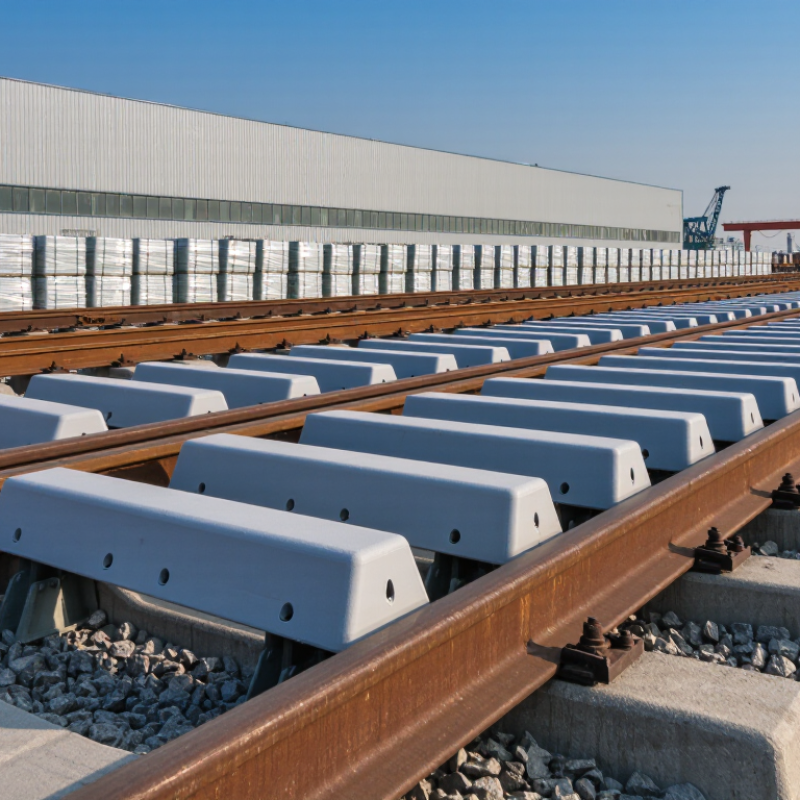
Plastic sleepers are support blocks placed beneath railway tracks. They maintain rail gauge and distribute wheel loads across the ground. Most are made from recycled or reinforced polymers, such as polyethylene or polypropylene. Some designs include steel reinforcement for higher loads. They are not universal. A sleeper must match the rail profile, fastening system, axle load, and local climate.

These sleepers are used on main lines, industrial railways, yards, bridges, and temporary track sections. They also suit landscaping, pedestrian paths, and marine structures where timber may absorb water or decay. In a railway yard, a plastic sleeper can remain exposed to oil, rain, and repeated vibration. However, heat expansion and long-term deformation still require careful evaluation. Moisture is not harmless. Poor drainage may weaken the surrounding ballast and affect track stability.

When comparing a China plastic sleeper supplier, request independent test reports, material details, dimensional drawings, and batch traceability. Check compression strength, fatigue performance, fire behavior, ultraviolet resistance, and fastening pull-out results. Ask for installation guidance and evidence from comparable projects. Factory experience matters, but documented quality control matters more. Samples should be inspected before large orders. A small gap often appears between laboratory results and field performance. Reviewing that gap honestly helps engineers choose a safer and more economical solution.

Which Quality Standards Should China Suppliers Meet?

A reliable China plastic sleeper supplier should meet both management and product quality standards.

ISO 9001 certification is a useful starting point, but it cannot prove sleeper performance alone. Suppliers should provide batch traceability, calibrated testing equipment, and inspection records for every production lot.

Ask for tensile testing under ISO 527, flexural testing under ISO 178, impact testing under ISO 179, and water absorption testing under ISO 62. Creep resistance and ultraviolet aging also matter, especially for sleepers exposed to summer heat and heavy axle loads.

Material transparency is equally important. The OECD’s 2022 Global Plastics Outlook reported 460 million tonnes of global plastic production in 2019, with 353 million tonnes becoming plastic waste.

Therefore, suppliers should identify polymer types, recycled content, additives, and contamination limits. Environmental claims should follow ISO 14021 rather than vague statements such as “eco-friendly.” The supplier should also test dimensional stability after heat, moisture, and freeze-thaw cycles. Small changes can affect fastening alignment.

Railway projects may require additional specifications from national authorities, infrastructure owners, or recognized engineering bodies. Request independent laboratory reports, not only factory certificates. A certificate can be genuine and still incomplete.

In procurement practice, I would inspect sample sleepers, measure hole spacing, and review failure data from comparable climates.

This step feels slow. It is still cheaper than replacing unstable sleepers after installation.

One weakness remains: there is no single universal standard for every plastic sleeper application, so the project specification must control final acceptance.

How to Evaluate a Plastic Sleeper Manufacturer’s Capabilities

What Is the Best China Plastic Sleeper Supplier?

How to Evaluate a Plastic Sleeper Manufacturer’s Capabilities

Choosing a plastic sleeper manufacturer requires more than checking price or product photos. Start with material engineering. The OECD Global Plastics Outlook reports that global plastic production reached 460 million tonnes in 2019. Only 9% was recycled. This makes resin traceability, recycled-content control, and contamination testing essential. Ask for batch records, material certificates, and test results from independent laboratories.

Evaluate the factory on four practical points: tooling accuracy, production stability, quality inspection, and field experience. A reliable manufacturer should explain its compression, bending, impact, creep, and weathering tests. It should also provide dimensional records for each production batch. Visit the line if possible. Look for clean material storage, calibrated testing equipment, and operators who understand rail tolerances. A strong factory can share installation feedback from different climates, not only laboratory figures. That detail matters. Laboratory performance can still fail after years of vibration, moisture, and temperature changes.

Tips: Request a pilot order before signing a large contract. Compare sleeper weight, fastening compatibility, drilling quality, and surface wear. Check whether the supplier follows documented quality procedures, such as ISO 9001-based controls. The UNEP report Turning off the Tap states that annual plastic production exceeds 430 million tonnes, increasing pressure for responsible material use. Ask how production scrap is handled. This is often overlooked. I would also require a written warranty, inspection plan, and clear corrective-action process. Fancy brochures cannot replace traceable evidence.

What Is the Best China Plastic Sleeper Supplier? - How to Evaluate a Plastic Sleeper Manufacturer’s Capabilities

A practical evaluation framework for comparing plastic sleeper manufacturers without relying on brand names

Evaluation Dimension What to Verify Reliable Evidence or Benchmark Recommended Weight Evaluation Score
Material Composition Confirm whether the sleeper is manufactured from recycled plastic, virgin polymer, or a controlled blend, and identify the polymer type and additives. Material specification, safety data sheet, recycled-content declaration, and laboratory test report. For recycled materials, verify contamination and moisture-control procedures. 15% 0–10
Mechanical Performance Assess bending strength, compressive strength, impact resistance, creep behavior, fastening performance, and dimensional stability. Independent test reports using the applicable railway, infrastructure, or customer-specific specification. Test results should identify specimen size, conditioning, test method, and acceptance criteria. 20% 0–10
Weather and Environmental Resistance Check resistance to ultraviolet exposure, rain, freeze-thaw cycles, temperature changes, moisture, insects, and biological decay. Accelerated weathering data, water-absorption results, freeze-thaw testing, and documented performance limits for the intended climate. 12% 0–10
Dimensional Accuracy Verify length, width, height, hole position, rail-seat geometry, tolerances, and consistency between production batches. Approved engineering drawings, calibrated measuring equipment, first-article inspection records, and batch inspection reports. 10% 0–10
Production Process Determine whether the manufacturer uses compression molding, injection molding, extrusion-based processing, or another controlled method suitable for the required geometry. Process flow chart, machine list, production parameters, maintenance records, and documented controls for temperature, pressure, cooling, and cycle time. 10% 0–10
Quality Management Review incoming-material inspection, in-process controls, final inspection, nonconformance handling, corrective action, and employee training. A current quality-management certificate where applicable, internal audit records, inspection plans, calibration certificates, and corrective-action reports. 12% 0–10
Testing Capability Assess the ability to perform routine dimensional, mechanical, thermal, chemical, and aging tests internally or through qualified laboratories. Test equipment inventory, equipment calibration records, laboratory qualifications, sample-retention procedures, and test-result traceability. 8% 0–10
Customization and Engineering Support Evaluate the supplier’s ability to adapt dimensions, fastening layouts, surface details, colors, markings, and packaging to project requirements. Engineering drawings, prototype samples, mold-design review, revision-control procedure, and documented approval workflow. 5% 0–10
Capacity and Delivery Reliability Confirm realistic monthly output, production lead time, raw-material availability, spare capacity, and contingency planning. Capacity statement, recent production schedule, purchase-order delivery records, bottleneck analysis, and documented business-continuity measures. 5% 0–10
Traceability and Documentation Check whether each batch can be linked to raw materials, production date, machine, operators, inspection results, and shipment records. Batch numbering system, certificates of conformity, inspection records, production logs, and document-retention policy. 3% 0–10
Total Recommended Weight 100% / 10

Scoring Guidance: Score each dimension from 0 to 10. Multiply the score by the recommended weight, then add the weighted results. A supplier should not be approved solely on price; mechanical performance, environmental resistance, quality control, and traceable test evidence should receive priority.

What Factors Distinguish the Best China Plastic Sleeper Supplier?

The best China plastic sleeper supplier is distinguished by evidence, not attractive catalog photographs. Start with material traceability. The OECD’s Global Plastics Outlook reported 353 million tonnes of plastic waste in 2019, while only 9% was recycled. Therefore, a reliable supplier should identify polymer sources, recycled content, additives, and batch numbers. Recycled plastic is useful, but inconsistent feedstock can change stiffness and dimensional stability. This detail matters.

Railway experience should be visible in testing records. Ask for compression, bending, fastening-pullout, water-absorption, ultraviolet, and temperature-cycle results. Testing should follow relevant railway requirements, such as EN 13230 or applicable AREMA guidance, rather than an internal checklist alone. Request laboratory names, specimen dimensions, conditioning methods, and raw data. A certificate without test conditions proves little. It happens more often than buyers admit.

Production control separates a dependable supplier from a trading intermediary. Check mold maintenance, process-temperature records, sampling frequency, and corrective-action reports. Visit the factory if possible, and inspect sleepers beside the production line. Measure length, hole position, weight, and surface defects. I would also request independent testing before a large order. The cheapest quotation may reduce inspection costs today, yet create installation problems later. No supplier is perfect; transparent responses to failed samples are more valuable than polished promises. Reliability is built through repeatable batches, documented engineering changes, realistic lead times, and clear warranty terms.

How to Compare, Verify, and Select the Right Supplier

What Is the Best China Plastic Sleeper Supplier?

Selecting a plastic sleeper supplier requires more than comparing factory prices. UNIFE’s World Rail Market Study 2024 forecasts continued growth in global rail investment through 2027. That growth attracts capable manufacturers, but also inexperienced traders. Compare material formulation, production capacity, tooling ownership, and delivered cost. A low quotation may exclude molds, testing, packaging, or replacement stock.

Ask for traceable batch records and independent test results. Check density, water absorption, flexural strength, fastening pull-out resistance, and dimensional stability. Thermal and ultraviolet aging tests matter for exposed tracks. The OECD’s Global Plastics Outlook reports that only 9% of plastic waste has been recycled historically. Therefore, require documented recycled content, resin origin, and processing controls. A factory video proves little.

Verify certificates directly with the issuing laboratory. Inspect the production line, storage area, mold condition, and measurement equipment. Request samples from normal production, not specially prepared pieces. Compare rail-seat dimensions with your drawings and measure them yourself. ISO 9001 certification supports process control, but it does not guarantee sleeper performance. That distinction is easy to miss.

Supplier selection should also examine response speed, corrective-action records, minimum order quantity, warranty terms, and spare-part capability.

Ask how rejected sleepers are segregated. Ask what happens after a failed batch. No checklist is perfect. A supplier can pass documents and still struggle with consistency. A small pilot order, followed by field monitoring, exposes problems earlier than a large contract.